


Yongxing: Your Professional Grinding Ball Manufacturer
Maanshan Yongxing New Material Technology Co., LTD., founded in 2003, is located in Maanshan, Anhui Province. It is a professional manufacturer of precision castings, heat-resistant steel, chromium series casting balls, and casting cylpebs. After twenty years of deep cultivation, the company has now developed into a large-scale foundry enterprise with an annual output of 70,000 tons.
Our Advantages
Product Innovation Strength
Our company continues to innovate products and produces various precision castings, heat-resistant steel, chromium series casting balls, and casting cylpebs. At the same time, we have also obtained more than 60 utility model patents.
Significant Production Capacity
Our company has a standardized factory building of 20,000 square meters, with an annual casting output of 70,000 tons, which can quickly meet users' needs for large-volume products.
Reliable Product Quality
Our company has obtained multiple management system certifications and has professional production and testing equipment to ensure that the qualification rate of various castings is extremely high.
Broad Market Reach
More than 200 experienced employees can provide professional services to customers in more than 200 countries and regions around the world.


Steel Grinding Ball is a kind of carrier used in ball mills, cement mills, mineral mills, and other equipment to help grind materials. Commonly used grinding media are steel grinding balls. The materials for making such grinding media are mostly cast iron alloys, alloy round steels, etc. that have been specially processed.

Common Types of Grinding Balls

Metal Grinding Media Ball
There are many variations of passages of available but the majority have suffered alteration in some form, by injected humou or randomised words even slightly believable. All of our products are formaldehyde free environmental protection,provide the most healthy home for you.
Non-Metal Grinding Media Ball
The natural ball stone grinding media mainly refers to natural materials such as silica, sea pebbles and pebbles. In recent years, with the increasing depletion of high-grade natural ball stone and the rapid development of the ceramic industry, natural ball stone grinding media has been basically replaced by artificial grinding media.
Advantages of Steel Grinding Ball
High Hardness
Forged grinding balls exhibit exceptional hardness, crucial for efficient and consistent grinding. This hardness is achieved through careful material selection and precise heat treatment processes.
Good Wear Resistance
The high hardness of forged steel grinding balls contributes to superior wear resistance, ensuring extended operational life and minimizing the need for frequent replacements.
High Impact Toughness
These grinding balls are designed to withstand high impact forces generated during the grinding process. Their exceptional impact toughness prevents breakage and deformation, maintaining grinding efficiency.
Uniform Structure
Forged steel grinding balls have a uniform and dense microstructure, resulting from the forging process. This contributes to their reliable performance and resistance to cracking or chipping during grinding operations.
Application of Steel Grinding Ball
Steel Grinding Ball can be used in milling and dispersion in the following applications:
- Advanced Ceramics
- Bio Technologies (DNA & RNA isolation)
- Chemicals Including Agrochemicals, e.g. Fungicides, Insecticides
- Coatings, Paints, Printing and Inkjet Printer Inks
- Electronic Materials and Components, e.g. CMP Slurry, Ceramic Capacitors, Conductive Inks
- Food Processing
- Lithium Ion Battery Materials
- Nanomaterials
- Minerals Processing
- Organic Synthesis
- Pigments and Dyes
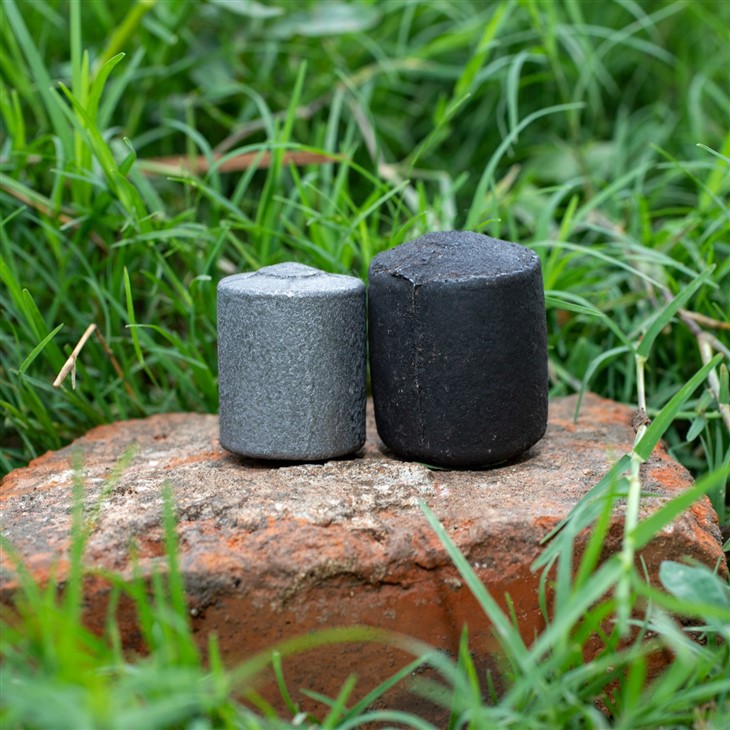
Material of Steel Grinding Ball

Steel Grinding Media
Steel grinding media is used in mining where they are used to extract precious metals in ore mineral processing. Since ore particles must go through the grinding process, steel grinding media are ideal for such a grinding process. Steel ball grinding media are made from alloys of iron and carbon. By increasing the carbon content to produce cast irons, both the hardness and wear resistance are improved significantly. There are different types of steel ball mills, they are, cast nickel alloys, stainless steel. They are usually applied in the grinding process of copper, gold, iron ore and polymetallic. Steel ball grinding media are used in tower mills, rotary mills, semi-autogenous grinding (SAG) mill.
Efficiency leap Precision and stability
This grinding media is made of ceramic as the name suggests. It is used occasionally in small-sized mills in the industries such as the chemical industry and food industry. Ceramic ball mills could be in high or regular density. Regular ceramic balls are often porcelain balls and high-density ceramic balls are more abrasion resistant as they are made with high alumina oxide content. Ceramic grinding media are well suited for procedures that involve mixing and dispersing because of its abrasion-resistant function. For example, in pharmaceutical processes, ceramic grinding media is used to prevent impurities.

Production Process of Steel Grinding Ball
There are three kinds of steel ball manufacturing processes: forging, rolling, and casting.

Casting
The quality of cast steel balls mainly depends on the content of chromium. In recent years, the price of chromium has been rising, and environmental protection factors have led to the increasing cost of cast steel balls.

Forging
Using high manganese steel as raw material, and using a pneumatic forging hammer with a spherical die to make the steel balls. It has the characteristics of a small investment and quick start, but high dependence on human beings.

Rolling
Using a high manganese steel bar as raw material, and using the rolling mill with a special spiral hole die to make steel balls. The production efficiency and automation degree is high, but the investment cost is also high.
Factors to Consider Before Choosing Steel Grinding Ball


Know Your Material
Identify the material you want to grind. Is it a brittle material like ceramics, a ductile material like metals, or a soft material like plastics? Understand the hardness, density, and abrasiveness of the material. This information will help you choose the appropriate grinding media.
Consider the Desired Final Particle Size
Determine the target particle size distribution you want to achieve after milling. Different grinding media have varying capabilities for producing fine or coarse particles.
Understand the Grinding Environment
Decide whether you will be operating the ball mill in a wet or dry environment. Wet grinding typically uses different types of media than dry grinding. Consider the pH level and corrosiveness of the material being ground. Some materials may require specialized corrosion-resistant media.
Choose the Type of Grinding Media
Common types of grinding media include steel balls, ceramic balls, cylpebs (cylindrical grinding media), and pebbles. Each type has its own characteristics: Steel Balls: Suitable for most materials, especially for dry grinding. Different steel alloys are available for various applications. Ceramic Balls: Ideal for grinding hard and brittle materials. They are often used in high-purity environments. Cylpebs: Cylindrical grinding media that can provide a higher surface area for grinding compared to balls.Pebbles: Used in some specialized applications, such as grinding ore in the mining industry.
Determine the Size of the Grinding Media
The size of the grinding media should be chosen based on the desired grinding efficiency and the size of the material being ground. Smaller media tend to produce finer particles. Use the manufacturer's recommendations or perform tests to determine the optimal size range.
Consider the Ball Mill's Operating Parameters
Take into account the speed of rotation, mill size, and filling level. These factors can influence the choice of grinding media.
Conduct Laboratory Testing
Before using a particular type of grinding media in a production setting, it's advisable to conduct laboratory tests to determine the best-performing media for your specific application.
Monitor and Optimize
Continuously monitor the grinding process to ensure it meets your desired outcomes. Adjust the type and size of grinding media as needed to optimize performance.
Our Certificate
We have obtained the Certificate Of Machin


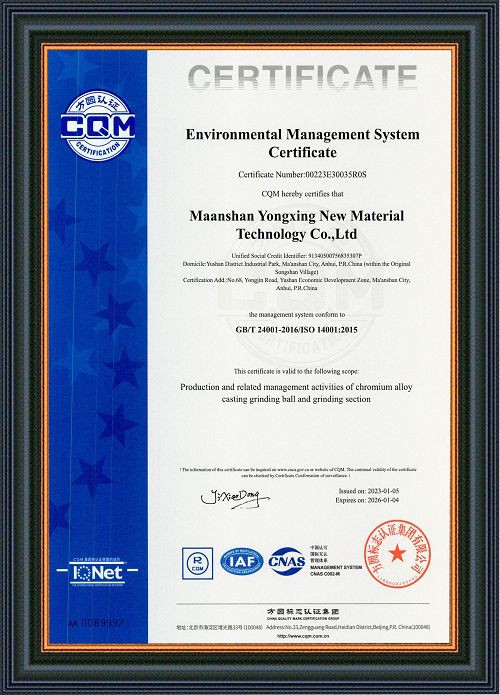
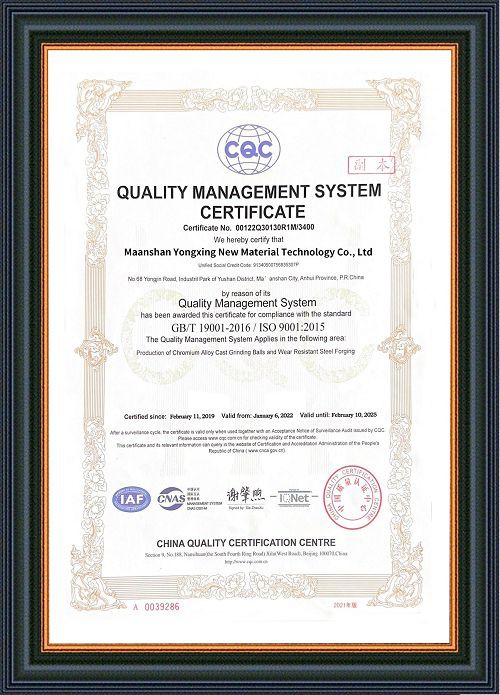

Our company has obtained environmental management system certification, occupational health and safety management system certification, quality management system certification, etc. The production process is scientific and the product quality is stable.
Ultimate FAQ Guide to Grinding Ball
Hot Tags: steel ball for mining, China steel ball for mining manufacturers, suppliers, factory, Grinding Cast High Chrome Ball, Grinding Casting Iron Ball, Grinding Cast Steel Ball, Grinding Cast Ball, Grinding Cast Mill Ball, Grinding Balls for Ball Mill