


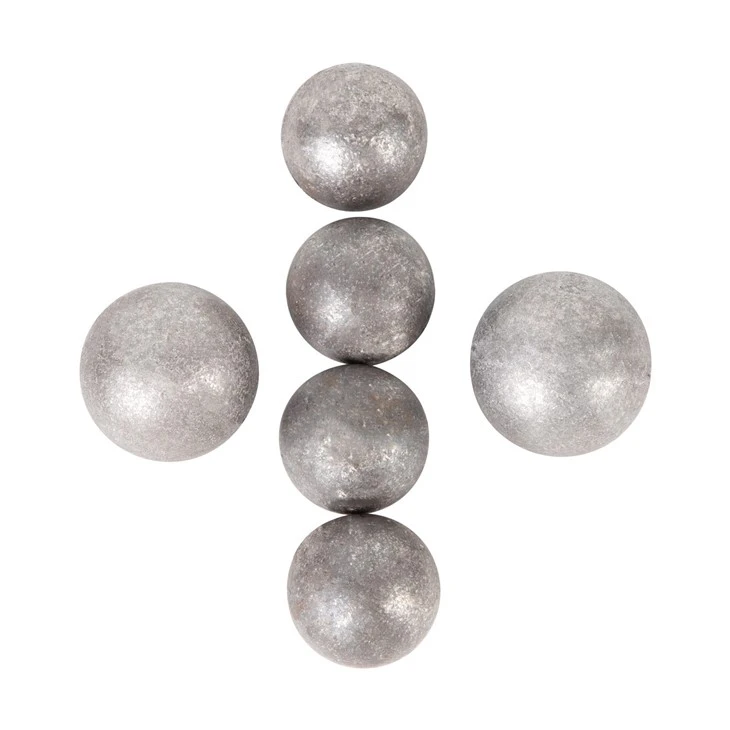
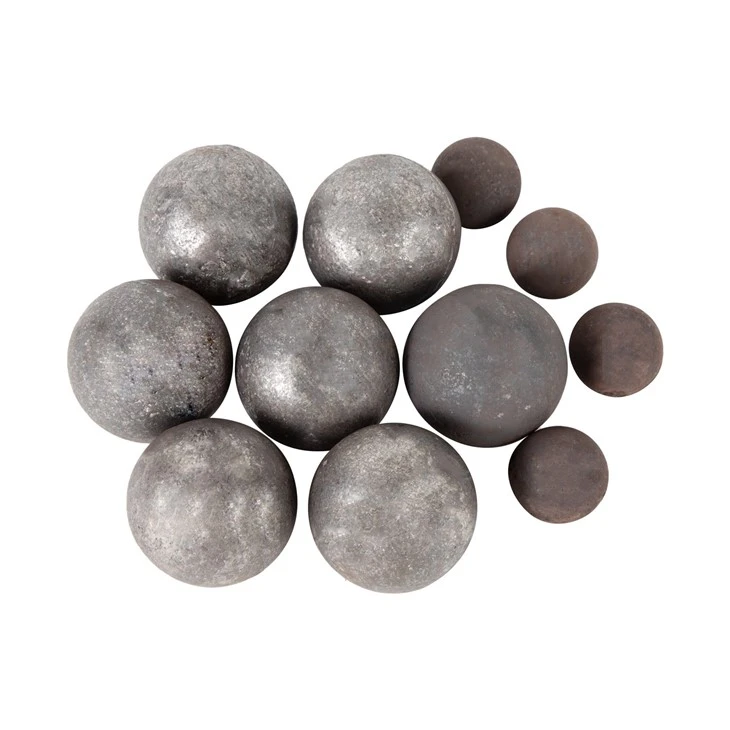
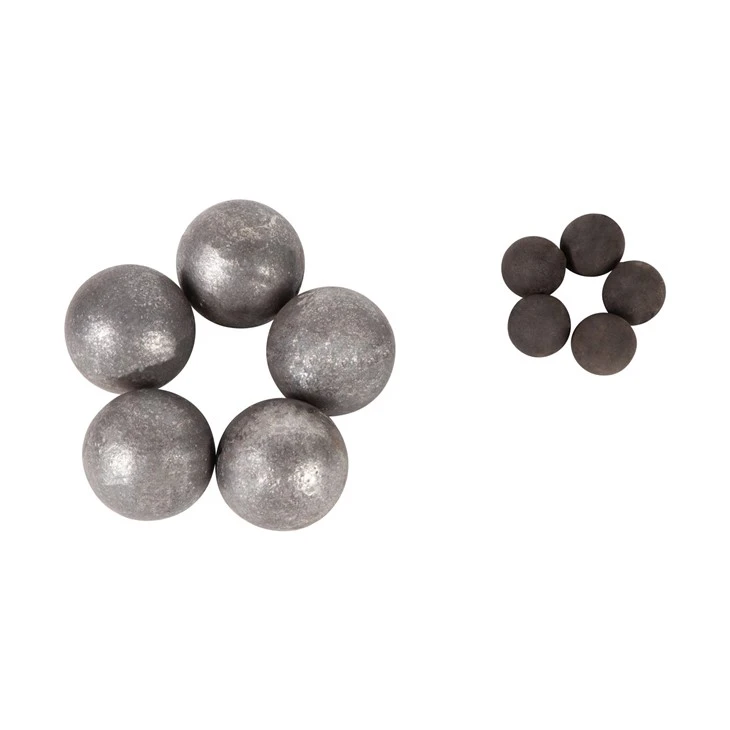
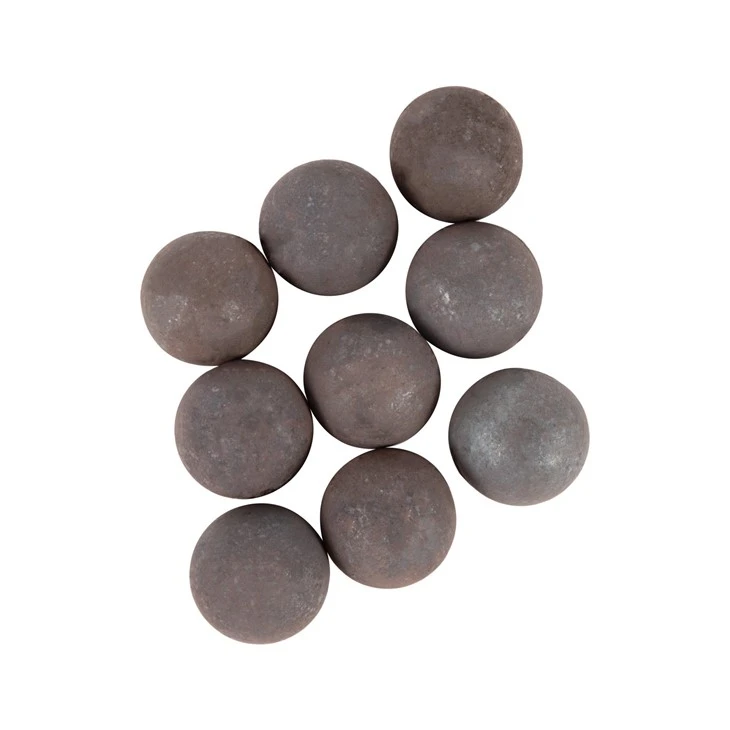
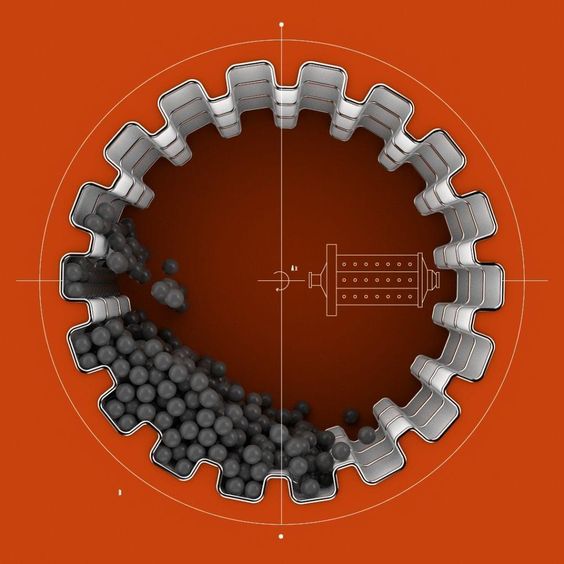
Alloy cast balls play a crucial role in various industrial applications, particularly in fields like mining, cement production, and metallurgy. Steel ball for mining is commonly used as grinding media in ball mills, crushers, and other machinery where the primary purpose is to reduce the size of materials. The performance and durability of alloy cast balls depend on their composition, and alloys are carefully engineered to meet the specific requirements of the application. In this detailed discussion, we will delve into the role of each chemical component commonly found in alloy cast balls, explaining how they impact the performance and characteristics of the final product.
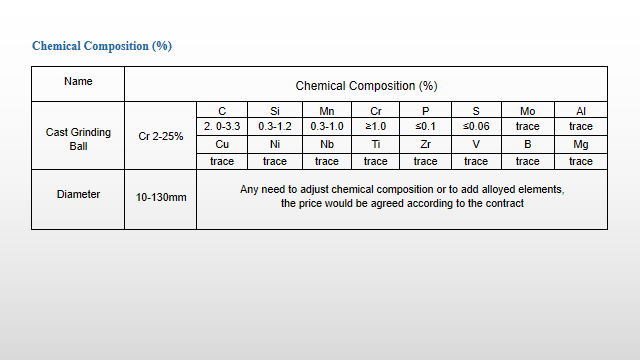
Steel ball for mining is typically composed of several chemical elements, including iron (Fe), carbon (C), chromium (Cr), manganese (Mn), and sometimes other elements such as molybdenum (Mo), nickel (Ni), and copper (Cu). The precise composition and ratios of these elements can vary significantly to cater to the specific demands of the application. Let's break down the role of each of these elements:
Iron (Fe): Iron is the primary component of alloy cast balls, forming the base material. It provides the structural integrity and strength to the balls. The phase structure of iron in the alloy can be tailored to achieve desirable properties such as hardness and wear resistance.
Carbon (C): Carbon is an essential element in the manufacturing of alloy cast balls. It primarily influences hardness and wear resistance. When combined with iron, carbon forms iron carbide (Fe3C), which is extremely hard and contributes to the wear resistance of the balls. The carbon content is carefully controlled to achieve the desired hardness without making the balls too brittle.
Chromium (Cr): Chromium is a crucial alloying element in cast balls as it enhances their resistance to corrosion and wear. It promotes the formation of hard, wear-resistant chromium carbides (Cr7C3 and Cr23C6) within the microstructure. Chromium content in the range of 10-30% is common, and higher chromium levels increase hardness and wear resistance. High-chromium alloy cast balls are widely used in cement and mining industries.
Manganese (Mn): Manganese is often added in smaller quantities to improve the toughness and impact resistance of the cast balls. It can form solid-solution phases with iron and enhance the overall mechanical properties of the alloy. Manganese content typically ranges from 0.2% to 1%.
Molybdenum (Mo): Molybdenum is an optional alloying element in some applications. It helps improve the hardenability of the alloy, which is the ability of the material to become harder when subjected to heat treatment. Molybdenum can enhance the balls' resistance to wear, especially at elevated temperatures. It's commonly found in low-chromium alloy cast balls.
Nickel (Ni): Nickel is another optional alloying element. Its addition can contribute to the balls' corrosion resistance and high-temperature properties. Nickel is often used in combination with other elements to create specific alloy formulations tailored for particular industrial environments.
Copper (Cu): Copper is used in small quantities to improve the corrosion resistance of the alloy cast balls. It forms copper-rich phases that can enhance the material's ability to withstand corrosive environments, such as those encountered in some mining applications.
The role of each chemical component in alloy cast balls can be summarized as follows:
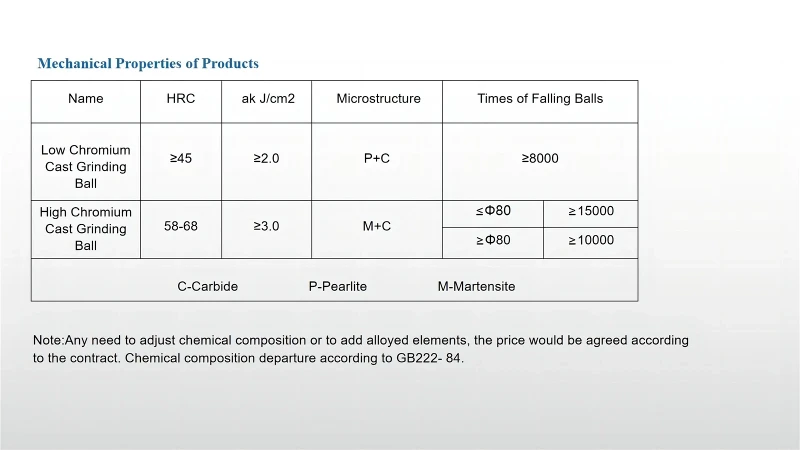
Hardness: The combination of carbon, chromium, and, in some cases, molybdenum, significantly influences the hardness of alloy cast balls. Hardness is a critical property for grinding media, as it determines their effectiveness in breaking down materials. High hardness ensures longer wear life and better grinding efficiency.
Wear Resistance: Chromium, in particular, plays a vital role in enhancing the wear resistance of the balls. Chromium carbides formed in the microstructure are extremely hard and resist abrasion, extending the service life of the balls.
Toughness and Impact Resistance: Manganese, nickel, and copper, when added in the right proportions, improve the toughness and impact resistance of the cast balls. This is essential for maintaining structural integrity when grinding materials that may contain hard or abrasive particles.
Corrosion Resistance: Chromium, nickel, and copper contribute to the corrosion resistance of the alloy. This is crucial in applications where the balls come into contact with corrosive materials or environments, such as in the mining and chemical industries.
Hardenability: Molybdenum is used to enhance the hardenability of the alloy, making it more amenable to heat treatment processes. This can further increase the hardness and wear resistance of the balls.
Temperature Resistance: Nickel, in combination with other elements, can improve the high-temperature properties of alloy cast balls. This is important in applications where elevated temperatures are encountered during grinding processes.
Microstructure: The precise combination of these elements and their ratios in the alloy influences the microstructure of the balls. The presence of various carbides, phases, and solid solutions within the microstructure determines the overall performance and characteristics of the balls.
In conclusion, the role of each chemical component in Steel ball for mining critical in determining their performance, durability, and suitability for specific industrial applications. The careful selection and control of these elements in the alloy composition allow manufacturers to tailor the properties of the cast balls to meet the unique requirements of industries such as mining, cement production, and metallurgy. Understanding the impact of each element is essential for optimizing the performance of grinding media in various industrial processes.
Hot Tags: steel ball for mining, China steel ball for mining manufacturers, suppliers, factory, Grinding Mill Ball, Steel Ball, Casting Grinding Steel Ball, Grinding Casting Mill Ball, Cast Iron Ball, Grinding Chrome Ball