

Calculating the consumption rate of grinding media iron balls in a grinding process is a crucial aspect for industries involved in mineral processing, cement production, and other related fields. As a supplier of high - quality grinding media iron balls, I understand the significance of accurate consumption rate calculations for our clients. This knowledge helps them optimize their operations, reduce costs, and improve overall productivity.
Understanding the Basics of Grinding Media Iron Balls
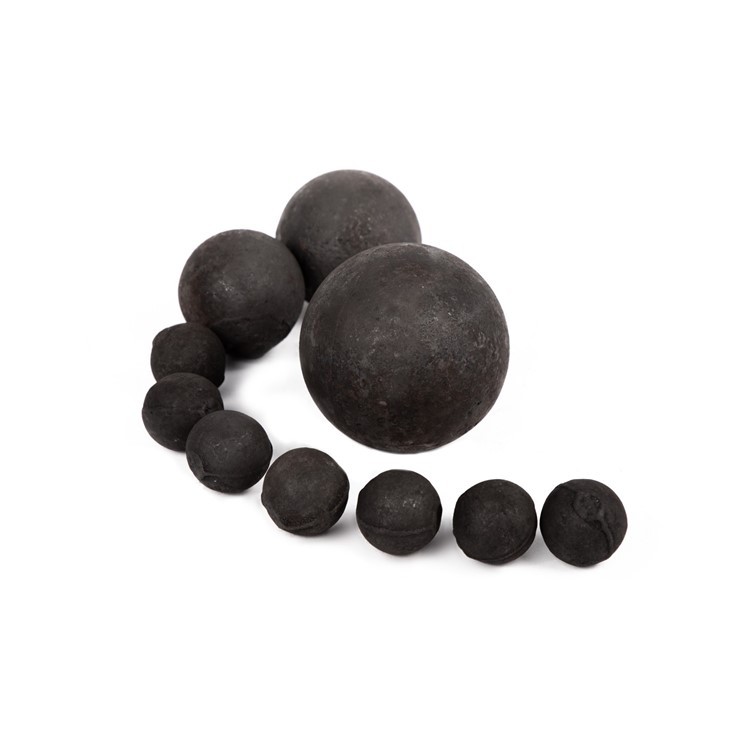
Grinding media iron balls are essential components in grinding mills. They are used to break down and grind various materials into finer particles. There are different types of grinding media iron balls available, such as Grinding Cast Chrome Ball, Steel Ball For Mining, and Grinding Casting Steel Ball. Each type has its own unique properties and is suitable for different grinding applications.
The quality of the grinding media iron balls directly affects the grinding efficiency and the consumption rate. High - quality balls are more wear - resistant, which means they will last longer and have a lower consumption rate. On the other hand, low - quality balls may wear out quickly, leading to higher consumption and increased costs.
Factors Affecting the Consumption Rate of Grinding Media Iron Balls
1. Material Properties
The hardness, abrasiveness, and moisture content of the material being ground play a significant role in the consumption rate of grinding media iron balls. Hard and abrasive materials will cause more wear on the balls, resulting in a higher consumption rate. For example, grinding quartz, which is a very hard mineral, will require more wear on the grinding media compared to grinding a softer material like limestone.
2. Mill Type and Operating Conditions
Different types of grinding mills, such as ball mills, rod mills, and autogenous mills, have different operating characteristics that affect the consumption rate. The rotational speed of the mill, the filling ratio of the grinding media, and the feed rate of the material also influence how quickly the grinding media iron balls wear out. A higher rotational speed may increase the impact force on the balls, leading to faster wear.
3. Grinding Media Quality
As mentioned earlier, the quality of the grinding media iron balls is a crucial factor. The chemical composition, heat treatment, and manufacturing process of the balls determine their hardness, toughness, and wear resistance. High - chrome alloy balls, for instance, are known for their excellent wear resistance and are often used in applications where high - intensity grinding is required.
Methods for Calculating the Consumption Rate of Grinding Media Iron Balls
1. Mass Balance Method
The mass balance method is one of the most common ways to calculate the consumption rate of grinding media iron balls. This method involves measuring the mass of the grinding media added to the mill over a certain period and the mass of the remaining grinding media at the end of that period. The difference in mass is the amount of grinding media consumed.
The formula for calculating the consumption rate using the mass balance method is:
[Consumption\ Rate=\frac{Mass\ of\ Media\ Added - Mass\ of\ Remaining\ Media}{Mass\ of\ Material\ Ground}]
For example, if 1000 kg of grinding media is added to the mill, and at the end of the grinding process, 800 kg of media remains, and 5000 kg of material is ground, then the consumption rate is:
[Consumption\ Rate=\frac{1000 - 800}{5000}= 0.04\ kg/kg]
This means that for every kilogram of material ground, 0.04 kg of grinding media is consumed.
2. Wear Rate Measurement
Another method is to measure the wear rate of the grinding media directly. This can be done by taking samples of the grinding media at regular intervals and measuring their dimensions. The change in dimensions over time can be used to calculate the wear rate.
The wear rate is usually expressed in terms of volume or mass loss per unit time. For example, if the initial mass of a grinding media ball is (m_1) and after a time (t), the mass is (m_2), the wear rate (W) can be calculated as:

[W=\frac{m_1 - m_2}{t}]
This method provides a more detailed understanding of how the grinding media is wearing out, but it requires more frequent sampling and measurement.
Importance of Accurate Consumption Rate Calculation
1. Cost Optimization
By accurately calculating the consumption rate of grinding media iron balls, companies can optimize their procurement strategy. They can determine the optimal amount of grinding media to purchase, reducing the risk of over - or under - stocking. This helps in minimizing inventory costs and ensuring a continuous supply of grinding media for the grinding process.
2. Process Efficiency
Understanding the consumption rate also allows companies to adjust the operating conditions of the grinding mill to improve efficiency. For example, if the consumption rate is too high, they can reduce the rotational speed of the mill or adjust the feed rate of the material to reduce the wear on the grinding media.
3. Environmental Impact
Lowering the consumption rate of grinding media iron balls has a positive environmental impact. Less consumption means less production of new grinding media, which reduces energy consumption and waste generation associated with the manufacturing process.
Tips for Reducing the Consumption Rate of Grinding Media Iron Balls
1. Select the Right Grinding Media
Choose the type of grinding media that is most suitable for the material being ground and the operating conditions of the mill. Consider factors such as hardness, wear resistance, and cost. As a supplier, I can provide expert advice on the best type of grinding media for your specific application.
2. Optimize Mill Operating Conditions
Adjust the rotational speed, filling ratio, and feed rate of the mill to ensure optimal grinding performance while minimizing the wear on the grinding media. Regularly monitor and maintain the mill to ensure it is operating at its best.
3. Quality Control
Implement strict quality control measures for the grinding media. Inspect the incoming grinding media to ensure it meets the required specifications. This will help in avoiding the use of low - quality balls that may lead to higher consumption rates.
Conclusion
Calculating the consumption rate of grinding media iron balls is a complex but essential task for industries that rely on grinding processes. By understanding the factors that affect the consumption rate and using appropriate calculation methods, companies can optimize their operations, reduce costs, and improve environmental sustainability.
As a supplier of grinding media iron balls, I am committed to providing high - quality products and technical support to our clients. If you are interested in learning more about our products or need assistance in calculating the consumption rate of grinding media for your specific application, please feel free to contact us for procurement and further discussions.
References
- "Mineral Processing Design and Operations: An Introduction" by Barry A. Wills and Tim Napier - Munn
- "Cement Technology" by Ulrich Pechmann
- Industry reports on grinding media and grinding processes from various research institutions.