Products
Grinding Media Ball For Mining

Grinding Media Ball For Mining

Broad Market Reach More than 200 experienced employees can provide professional services to customers in more than 200 countries and regions around the world.

Yongxing: Your Professional Grinding Ball Manufacturer


Maanshan Yongxing New Material Technology Co., LTD., founded in 2003, is located in Maanshan, Anhui Province. It is a professional manufacturer of precision castings, heat-resistant steel, chromium series casting balls, and casting cylpebs. After twenty years of deep cultivation, the company has now developed into a large-scale foundry enterprise with an annual output of 70,000 tons.


Our Advantages

Product Innovation Strength

Our company continues to innovate products and produces various precision castings, heat-resistant steel, chromium series casting balls, and casting cylpebs. At the same time, we have also obtained more than 60 utility model patents.

Significant Production Capacity

Our company has a standardized factory building of 20,000 square meters, with an annual casting output of 70,000 tons, which can quickly meet users' needs for large-volume products.

Reliable Product Quality

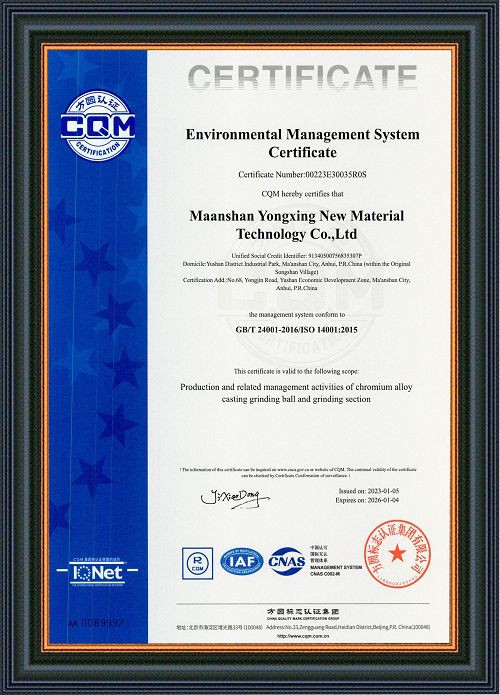
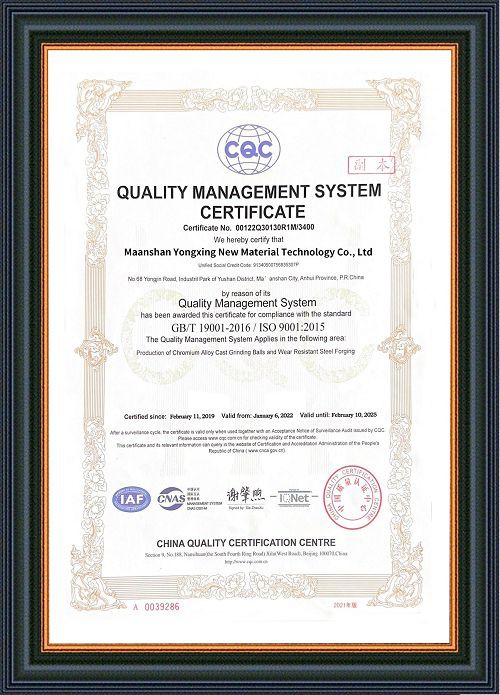
Our company has obtained multiple management system certifications and has professional production and testing equipment to ensure that the qualification rate of various castings is extremely high.

Broad Market Reach

More than 200 experienced employees can provide professional services to customers in more than 200 countries and regions around the world.


Introduction to Grinding Media Ball

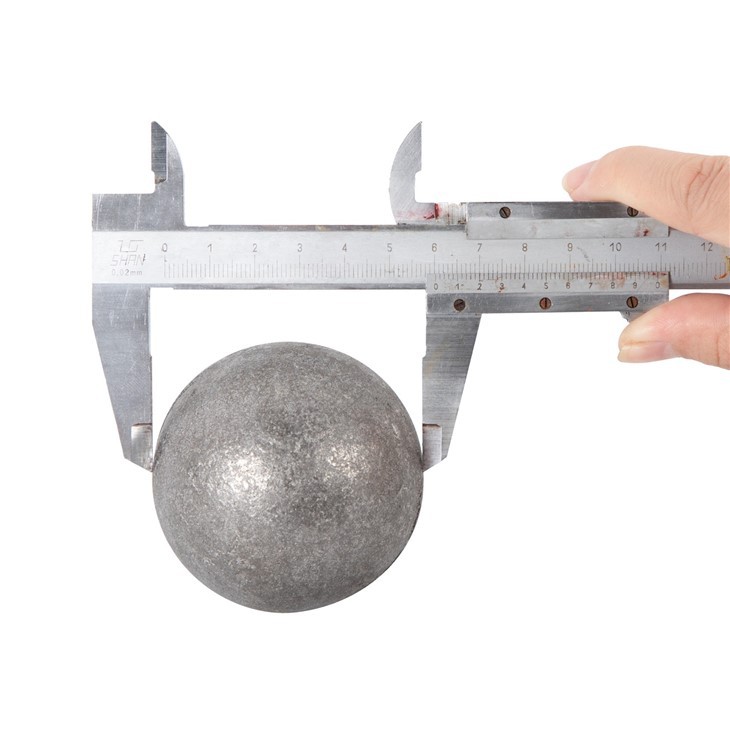
The grinding media ball is the type of ball which is made of chrome steel and the inner surface of the cylindrical shell is lined with a material such as manganese steel. This ball is directly heated from high carbon and chromium alloyed steel bar which is followed by straightening and in line heat treatment and it is trained to give uniform hardness all over the ball. It gives a high resistance to both abrasion and impact and gets resistance to bending.

Grinding Casting Chrome Ball


Types of Grinding Media Balls


Ball Mill Media


01

Steel Balls

The most commonly used grinding media material is steel balls. They come in an array of configurations, including low carbon, high carbon, chrome, and stainless steel. Steel balls exhibit remarkable durability and versatility, making them suitable for a wide range of applications in the grinding industry.

Ball Mill Media


02

Ceramic Balls

Ceramic balls, with their exceptional hardness and high density, are favored for grinding tasks involving sensitive materials like chemicals and pigments. These balls offer superior wear resistance and reduced contamination, ensuring top-notch results in specialized applications.

Grinding Casting Chrome Ball


03

High-Density Alumina Balls

For grinding minerals, ores, and clinkers, high-density alumina balls emerge as the material of choice. Their impressive thermal properties and resistance to abrasion guarantee stable performance even under harsh operating conditions.

Ball Mill Media


04

Zirconia Balls

Zirconia balls, owing to their outstanding strength, low thermal conductivity, and resistance to chemicals, take center stage in grinding operations dealing with tough and abrasive substances. Their premium attributes contribute to extended service life and high-quality output.


Forged Grinding Media


Advantages of Grinding Media Ball

Use Cast grinding ball the ore consumption is greatly reduced, the production cost of ore dressing is reduced, and the production efficiency is improved. The heat treatment process of high chromium cast iron grinding ball includes wind quenching, oil quenching, and special quenching solution treatment. After repeated test and mining, the oil quenching can fully meet all its technical specifications The consumption of iron ore is twice that of iron ore. The heat treatment process is the use of two-stage heat quenching and low-temperature tempering.
The microstructure of high chromium cast iron balls after heat treatment was observed by an optical microscope. The microstructure was mainly composed of martensite and Eutectic carbides with a little-retained austenite. After heat treatment, the surface hardness and the core hardness of the high chromium cast iron are all above HRC58. The hardness is stable and fluctuated little, and the wear resistance is very good. The impact energy is 4.7-5j / CM2, the impact toughness is very good, the breakage rate of the grinding ball is less than 1% 3. The ore consumption is 0.23 kg / ton compared with 0.6 kg / ton of forging ball.


Application of Grinding Media Ball
 

Mining and Mineral Processing

In the mining industry, grinding balls are used to crush and grind ore into smaller particles. This is a crucial step in the extraction of valuable minerals from ore. The ore is placed in a ball mill, and the grinding balls inside the mill help break down the ore into smaller pieces, which can then be processed further to extract the desired minerals.


Cement Industry

In the cement manufacturing process, grinding balls are used in cement mills to pulverize clinker (a mixture of raw materials) into a fine powder. This powder, when mixed with water, forms the cement paste that ultimately hardens into concrete.


Chemical Industry

Grinding balls are used in various chemical processes to grind and mix substances, create chemical reactions, or reduce particle size for specific applications.


Pharmaceutical Industry

In pharmaceutical manufacturing, grinding balls can be used in equipment like ball mills to reduce the size of active pharmaceutical ingredients (APIs) or to blend different components of pharmaceutical formulations.


Food Processing

In some food processing applications, grinding balls may be used to grind or refine ingredients to achieve the desired consistency or texture in food products.


Ceramics Industry

Ceramic grinding balls are commonly used in the production of ceramics and pottery. They help crush and mix raw materials, forming a uniform mixture that can be shaped and fired to create ceramic products.


Production Process of Grinding Media Ball

Raw Material Selection

The first step is to carefully select the appropriate raw materials for the grinding balls.

Forming the Balls

The selected raw material is shaped into spherical balls through different methods. For steel grinding balls, the most common method is the hot rolling process. The steel is heated to a high temperature and then passed through rolling mills to form the desired shape. For ceramic grinding balls, the shaping process may involve pressing or extrusion techniques followed by sintering.

Heat Treatment

Heat treatment is an essential step to ensure the desired hardness and toughness of the grinding balls. The balls are heated to specific temperatures and then cooled rapidly or gradually to achieve the desired metallurgical properties. This process helps enhance the wear resistance and mechanical strength of the balls.

Grinding Casting Mill Ball

Grinding and Cleaning

After the heat treatment, the grinding balls undergo a grinding process to remove any surface imperfections and further refine their shape and size. This step ensures the balls meet the required tolerances and quality standards. Following grinding, the balls are thoroughly cleaned to remove any contaminants or residues.

Quality Control and Testing

Throughout the manufacturing process, quality control measures are implemented to ensure the grinding balls meet the required specifications. This includes dimensional checks, hardness tests, and other quality assessments to ensure consistency and performance.


Factors to Consider Before Choosing the Grinding
 

Media Ball
Grinding balls are essential mechanical components in ball and semiautogenous (SAG) mills. Their function is crushing and grinding ore rocks weighing up to 45 kg (100 lb) preparatory to recovery of valuable minerals, from lead through rare earth elements, which are essential to the approaching 21st century technological society. Their design, manufacture, and selection deserve careful attention.
Motors convert electrical energy to mechanical torque to rotate ball and SAG mills so their ore/ball charges cascade continuously. During each revolution, each individual ball's quantum of kinetic energy is delivered, through rapid deceleration impacts, on ore fragments to break them in preparation for mineral recovery.
Critical ball design features include new size and mass, worn size distribution, chemistry, hardness, microstructure, toughness, internal stress, and stability of microstructure. These factors determine how effectively and economically the balls grinding mission will be performed. These features, therefore, must be carefully designed, specified, and maintained. Seemingly small deviations from design, or small deficiencies in properties or quality, have large effects on grinding performance and economics.


Importance of Size
Size of balls should be proportional to the work to be done, i.e. the size of the particle that must be broken by impact, hence coarse feed and hard ores require larger balls than finer feeds and softer ores.


Ball Size Availability
Given the importance of weight/mass, in an ideal world, ideal ball size could be selected from an infinite size range. Presently, in many cases, only two ball sizes are available for a given milling operation -too big and too small. The weight increments between ball sizes are too large to allow precise selection.


Control of Ball Weight
The specified weight should be maintained in all shipments by minimizing variations from nominal weight. This is the manufacturers job. There is wide variation in weight between manufacturer's balls and between balls from different lots of balls currently being made. A light ball is actually a defective ball.


Our Certificate
 

We have obtained the Certificate Of Machin

productcate-1-1
productcate-1-1
productcate-1-1
productcate-1-1
productcate-1-1


productcate-1-1


Our Factory

Our company has obtained environmental management system certification, occupational health and safety management system certification, quality management system certification, etc. The production process is scientific and the product quality is stable.


Ultimate FAQ Guide to Grinding Ball
 

Q: What are the advantages and disadvantages of forged steel ball?

A: Advantages of forged steel ball
● The breaking rate is less than 1%
● The wear resistance is good
● The price is cheap, the cost performance is high
●Disadvantage of forged steel ball
● The production efficiency is low.

Q: What types of Grinding Media Balls are there?

A: Steel Grinding Media
This type of media is made of carbon. It will be doped with numerous chemical elements and its fame for the hardness and then the strength
Cast Iron Grinding Media
The production meant for this media is called cast iron and it's mostly gray and then white
Ceramic Grinding Media
This type is mostly used ceramic and it will make the particles small and used in the food factory.

Q: What does Grinding Media Ball do?

A: When comes to milling and dispersion process there are more chances for material damage and then splits. In order to avoid such thing grinding balls are used. The balls are made of heavy metal and other material thus undoubtedly there the pressure will be high. If the pressure gets impacted on the material then it will offer pressure to the particles. It will completely reduce the size of the particle at the same time you will have resulted with finite particles. In short, contamination is the actual reason to use grinding balls. It will make the particles to decrease in size.

Q: What are the disadvantages of ball milling process?

A: High Energy Consumption
Ball milling process uses a lot of electricity, leading to a high energy bill. It's not ideal for materials that aren't soft as it struggles to grind them down.
Limited to Soft Materials
When dealing with large amounts of substances, ball milling is not efficient and can take a long time.
Inefficient for Large Quantities
There's a risk that the materials being milled may become contaminated, affecting the end product's quality.
Contamination Risk
The process generates a lot of noise, which can be disruptive in certain environments.
Noise and Heat Generation
Additionally, it produces a significant amount of heat that can be a safety hazard or damage the material being milled.

Q: What are the advantages of ball milling?

A: Ball mills have a number of advantages for milling solids either wet or dry. In order to minimize product contamination, ball mills can be constructed with a wide range of materials including abrasion-resistant high-chrome steel, alumina brick, and cast polyurethane. Because all of the solids in a ball mill are forced to endure thousands of impacts by the grinding media over several hours, final particle size of 1-5 microns can be achieved and with narrow size distribution. Because ball mills are closed systems there is no chance for the finely divided solids to escape. Several of the independent variables can be reliably controlled including mill cylinder speed, media size, and of course time. Many products cannot experience elevated temperature when milling and ball mills can accommodate this by jacketing the cylinder and circulating cold water. Ball mills are available from 0.1 to 5000 gal wet or dry capacity.

Q: What is a grinding ball used for?

A: In the mining industry, grinding media are used to extract precious metals in minerals. Also, grinding balls are used in ball mills. They are useful when breaking down and grinding materials such as rocks, cement, and others.

Q: How to choose grinding media balls?

A: Grinding media comprises a range of objects. Grinding balls, beads, satellites, cylinders, diagonals, and ball-cones are all different shapes of abrasives. The media itself can be made up of a variety of materials, such as carbon steel, stainless steel, chrome steel, and non-metallics like ceramics or steatite.
Feed Size
The initial feed size matters because smaller media cannot easily break up large particles, so it shouldn't be used for large particle applications. Similarly, the final particle size should be considered, as smaller media is more efficient when ultrafine particles are anticipated.
Density
In general, high-density media give better results. The media should be denser than the material that is being ground. Also, highly viscous materials need media with a higher density to prevent floating. The specific gravity of grinding media is therefore essential to consider.
Hardness
The harder the media, the higher the grinding competence and the longer the wear. Some of the harder grinding medias are made of hardened steel, tungsten carbide, agate, and zirconia. The overall abrasiveness should also be taken into account. If a highly-abrasive media is put into a grinding chamber that isn't equally abrasive, not only will the media not be adequately ground, there is a risk of lasting damage to the chamber.

Q: What is the filling rate of grinding balls?

A: The filling rate of grinding media refers to the percentage of the volume of grinding media loaded into the ball mill to the effective volume of the ball mill. It can reflect the amount of grinding media loading in the mill. The filling rate of grinding media has a great impact on the grinding efficiency of the ball mill. When the conditions of ball mill are the same and the speed is constant, If the filling rate of the grinding media is too low, the sliding of the grinding medium will be increased and the impact surface of the material will be reduced; if the filling rate is too high, the grinding media will lose its normal dropping track, which will not only reduce the grinding efficiency but also increase the power consumption. Therefore, we should choose the most suitable filling rate through experience accumulation in production practice.

Q: Can grinding balls damage equipment?

A: Ball breakage contaminates the ground material and can damage the mill. Particularly at risk are the grinding body separation devices such as separation gaps, sieve gaps and sieve cartridges as well as the mechanical seal.

Q: What size balls to use in a ball mill?

A: To allow a stable cascade, ball diameter should not be much larger than 20% of the jar diameter. Smaller balls have more surface area and will have more strikes per revolution allowing for faster milling, but each strike has less energy, reducing effectiveness against harder materials.

Q: What is the hardness of grinding media?

A: Ball hardness is in the 60–67 HRC range. They wear better than 440C stainless steel and through-hardened carbon steel. They are also recommended for applications where a through-hardened steel ball is needed in larger sizes (½" and larger).

Q: What is the efficiency of ball mill grinding?

A: We can then define the grinding efficiency of a ball mill as the ratio between the specific grinding rate of the coarse solids in the ball mill and the grinding rate (grindability) of the ore in a standard laboratory mill.

Q: What are the applications of grinding balls?

A: Grinding balls are commonly used in industries such as mining, cement production, power stations, and chemical processing to grind and pulverize materials.

Q: What is the purpose of using grinding balls?

A: Grinding balls are used to break down materials into smaller particles, facilitating the extraction or refinement of valuable components.

Q: How do grinding balls work?

A: Grinding balls work by impacting and crushing materials within a grinding mill or other equipment, effectively reducing the size of the particles. The ball mill is made up of a hollow section that spins down either a horizontal or a vertical axis. The section is packed with balls. The materials to be crushed are added and the balls move around inside the mill, colliding with the materials. Grinding balls are used to grind materials into fine powders.

Q: How are grinding balls manufactured?

A: In manufacturing grinding balls, there are four essential steps. First melting, second molding, third separating, and the last heat treatment.

Q: What is the significance of grinding ball size and shape in industrial processes?

A: The size and shape of grinding media impact the final product quality in terms of particle size distribution and liberation of valuable minerals. Finer grinding media can produce a finer product size, while a combination of media sizes can help achieve a desired particle size distribution.

Q: What role does the hardness of grinding balls play in the grinding process?

A: The density and hardness of the grinding media play an important role in the grinding efficiency: the higher the density of the media, the higher the grinding efficiency; the higher the hardness and the lower the abrasion, the easier it is to ensure the purity of the product.

Q: How are grinding balls tested for quality assurance?

A: A typical test programme will include visual inspection, hardness testing at the surface and through thickness profile, chemical analysis, macro and microstructural examination. These control programmes can be tailored to suit individual customer requirements as required.

Q: Can grinding balls be recycled?

A: Yes, mill balls can be recycled. Steel balls can be recycled by melting them down and reshaping them into new mill balls. Ceramic balls, on the other hand, are more difficult to recycle due to their high melting point.

Hot Tags: grinding media ball for mining, China grinding media ball for mining manufacturers, suppliers, factory, Steel Ball, Grinding Cast Ball, Mill Ball, Forged Grinding Balls, Grinding Balls for Ball Mill, Metal Ball

Send Inquiry