

As a supplier of grinding chrome balls, I've been deeply involved in the industry for quite some time. One question that frequently arises from our clients is whether the hardness of the chrome ball affects the grinding process. In this blog post, I'll delve into this topic, exploring the relationship between chrome ball hardness and the grinding process based on scientific principles and practical experience.
Understanding Chrome Balls and Their Role in Grinding
Chrome balls are widely used in various grinding applications, such as in ball mills for the mining, cement, and chemical industries. They are designed to crush and grind materials into finer particles. The grinding process involves the repeated impact and abrasion of the chrome balls against the material to be ground. The efficiency and quality of this process are crucial for the overall productivity and product quality in many industries.
The Concept of Hardness in Chrome Balls
Hardness is a fundamental property of chrome balls. It refers to the material's resistance to indentation, scratching, or wear. In the context of chrome balls, hardness is typically measured using the Rockwell or Brinell hardness scales. A higher hardness value indicates that the chrome ball is more resistant to deformation and wear.
The hardness of chrome balls is determined by several factors, including the chemical composition of the chrome alloy, the heat treatment process, and the manufacturing method. For example, increasing the chromium content in the alloy can generally increase the hardness of the chrome ball. Heat treatment processes, such as quenching and tempering, can also significantly alter the hardness and microstructure of the chrome ball.
Impact of Chrome Ball Hardness on the Grinding Process
Grinding Efficiency
One of the most significant impacts of chrome ball hardness on the grinding process is the grinding efficiency. Harder chrome balls are generally more effective at breaking down large particles. When a hard chrome ball strikes a material particle, it can generate a higher impact force due to its resistance to deformation. This allows it to break the particle into smaller pieces more quickly, reducing the overall grinding time.
However, it's important to note that extremely hard chrome balls may also cause problems. If the chrome ball is too hard, it may not deform at all upon impact, causing the energy to be dissipated in a less efficient manner. In some cases, the hard chrome ball may even bounce off the material particle without effectively breaking it, leading to a decrease in grinding efficiency.
Wear Resistance
Hardness is closely related to wear resistance. Harder chrome balls are more resistant to wear, which means they can maintain their shape and size for a longer period during the grinding process. This is particularly important in applications where a consistent grinding performance is required. For example, in a ball mill used for continuous production, using hard chrome balls can reduce the frequency of ball replacement, resulting in lower maintenance costs and less downtime.
On the other hand, softer chrome balls may wear out more quickly. As they wear, their size and shape change, which can affect the grinding performance. The worn balls may not be able to generate the same impact force as new balls, leading to a decrease in grinding efficiency and product quality.
Product Quality
The hardness of chrome balls can also have an impact on the quality of the ground product. Harder chrome balls tend to produce more uniform particle sizes. Since they are more resistant to wear, they can maintain a consistent grinding action, resulting in a more consistent particle size distribution in the final product.
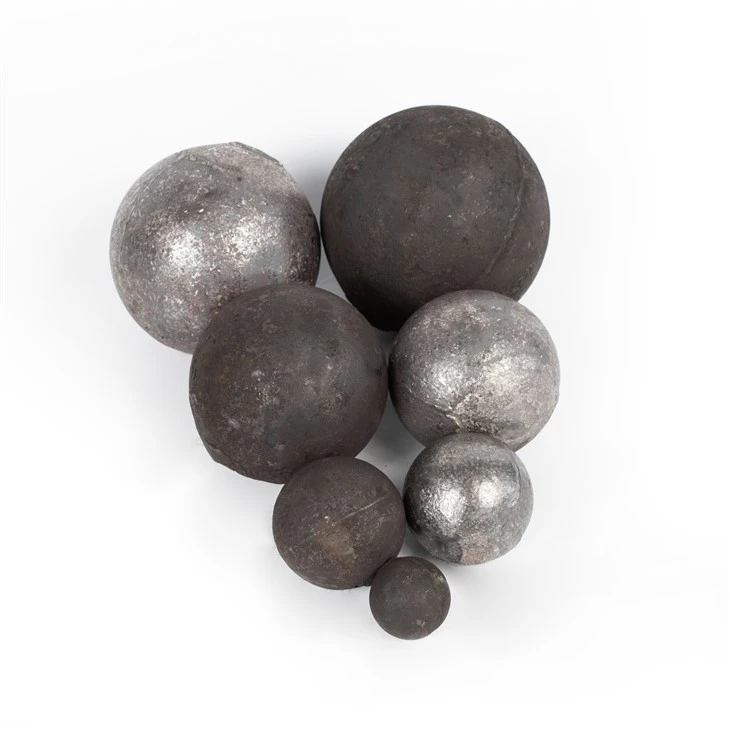
In contrast, softer chrome balls may produce a wider range of particle sizes due to their faster wear rate. This can be a problem in applications where a specific particle size is required, such as in the production of high - quality ceramics or pharmaceuticals.
Considerations When Choosing Chrome Ball Hardness
Type of Material to be Ground
The hardness of the material to be ground is an important factor to consider when choosing the hardness of the chrome ball. For grinding hard materials, such as quartz or granite, harder chrome balls are generally preferred. These hard chrome balls can withstand the high - impact forces generated during the grinding of hard materials and maintain their effectiveness.
For softer materials, such as limestone or coal, softer chrome balls may be sufficient. Using overly hard chrome balls for soft materials may not only be unnecessary but also increase the risk of over - grinding and energy waste.
Grinding Equipment
The type of grinding equipment also plays a role in determining the appropriate chrome ball hardness. Different grinding machines, such as ball mills, rod mills, and vertical mills, have different operating conditions and requirements. For example, ball mills typically operate at a higher rotational speed, which requires chrome balls with good wear resistance and impact strength. In this case, harder chrome balls may be more suitable.
Product Requirements
The final product requirements, such as the particle size distribution, purity, and surface finish, also influence the choice of chrome ball hardness. If a narrow particle size distribution is required, harder chrome balls may be a better choice. However, if the product requires a certain degree of surface smoothness, a softer chrome ball may be more appropriate as it can cause less surface damage during the grinding process.
Other Factors Affecting the Grinding Process
While chrome ball hardness is an important factor, it's not the only one that affects the grinding process. Other factors, such as the ball size, ball loading, and the operating parameters of the grinding equipment, also play crucial roles.
The ball size affects the grinding mechanism. Larger balls are more effective at breaking down large particles, while smaller balls are better at fine - grinding. The ball loading, which refers to the volume of chrome balls in the grinding mill, also affects the grinding efficiency. An appropriate ball loading can ensure that the chrome balls have enough space to move and interact with the material particles.
The operating parameters of the grinding equipment, such as the rotational speed, the feed rate, and the grinding time, also need to be optimized for the best grinding performance. For example, increasing the rotational speed of the ball mill can increase the impact force of the chrome balls, but it may also increase the wear rate of the balls and the energy consumption.
Conclusion
In conclusion, the hardness of the chrome ball has a significant impact on the grinding process. It affects the grinding efficiency, wear resistance, and product quality. While harder chrome balls generally offer better grinding performance in terms of breaking down large particles and wear resistance, the choice of chrome ball hardness should be carefully considered based on the specific requirements of the grinding process, including the type of material to be ground, the grinding equipment, and the final product requirements.
As a supplier of grinding chrome balls, we understand the importance of providing the right products to meet our clients' needs. We offer a wide range of chrome balls with different hardness levels, ensuring that our clients can find the most suitable chrome balls for their grinding applications. If you're interested in our Grinding Mill Ball For Ball Mill, Grinding Cast Steel Ball, or Iron Ball, please feel free to contact us for more information and to discuss your specific requirements. We're committed to providing high - quality products and excellent customer service to help you achieve the best grinding results.
References
- Smith, J. (2018). "Principles of Grinding Technology". Publisher: XYZ Publishing.
- Johnson, R. (2019). "Wear and Tear in Grinding Processes". Journal of Industrial Materials, 25(3), 123 - 135.
- Brown, A. (2020). "Optimizing Chrome Ball Hardness for Grinding Efficiency". International Journal of Mining and Metallurgy, 30(2), 89 - 98.